

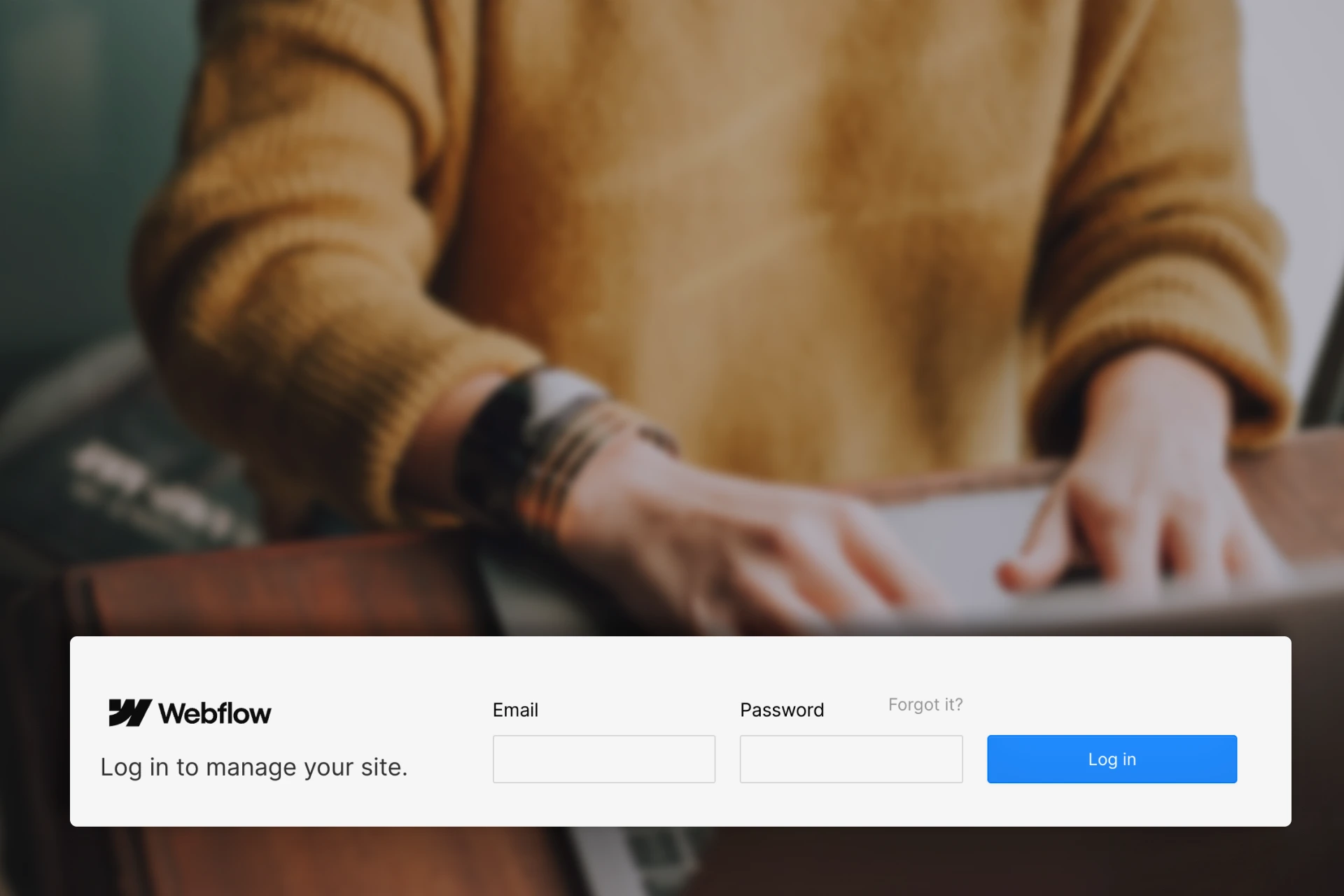
Webflow's legacy editor is being retired.
Here's what actually changes for your team
If you received Webflow's email on February 2nd, you already know: the legacy editor is being retired on August 4th, 2026. The email probably arrived in your inbox three weeks ago. If you haven't opened it yet, now's the time.
This isn't a surprise or a technical emergency. It's a deliberate evolution designed to give you more control over team permissions and collaboration. The legacy editor has served many teams well, but Webflow's new approach unlocks more flexibility for how teams actually work together.
Here's what that actually means for your business.
Why this matters
The legacy editor gave everyone broad access. You either had it or you didn't. This created friction: either clients saw everything (including settings they didn't need), or you restricted access entirely and became a bottleneck for simple updates.
Client seats solve this specific problem. They let you grant exactly the permissions people actually need: content editing, form submissions, hosting settings, or anything in between. Your team maintains control. Your clients get independence without confusion.
This changes how your team operates:
1. Marketing can update campaigns without waiting for developers
2. Clients can make content changes without accidentally breaking site logic
3. Developers focus on what they're actually good at, rather than fielding "can you change this image?" requests.
It's a shift from binary access to granular control. That's worth understanding before August 4th arrives.
What's actually changing in practice
Webflow has given everyone a clear timeline, and there's nothing dramatic happening immediately. Here's how it unfolds:
Now through May 3, 2026
You're still using the legacy editor exactly as you always have. Nothing changes today. Webflow is preparing the migration infrastructure behind the scenes.
May 4, 2026 onwards
The automatic migration begins. If you haven't already accepted your invitation, Webflow will automatically move your legacy editor access to a client seat during a two-week window. You'll get an email. Follow the link, create a Webflow account using your existing login details, and you're done. The process takes minutes.
Between May 4th and August 4th, you can use either your legacy editor access or your new client seat permissions. Webflow is giving you three months to get comfortable with the new system, test workflows, and make sure your team understands the change. No pressure, no disruption.
August 4, 2026
The legacy editor becomes unavailable. Everyone moves to client seats entirely. By this point, you'll have had three months to adjust. Your team knows how it works. It's a non-event.
What you're actually doing during this time: testing which permissions each team member needs, making sure your clients understand their new access level, and adjusting any workflows that relied on broad legacy editor permissions. Most teams find this takes a few hours of planning, not weeks of restructuring.
What this approach actually delivers
Businesses migrating to client seats report clearer workflows and fewer permission-related bottlenecks.
Your team works faster. Marketing updates landing pages without asking developers. Content editors fix typos in real time. Developers focus on technical improvements instead of fielding access requests.
You maintain security. Instead of giving someone full site access because they need to update one form, you grant exactly the permissions they need. Your site logic stays protected. Your brand integrity stays intact.
Clients get independence. When you're giving a client direct access to manage their own content, client seats let them see only what matters to them. No confusing settings. No accidental changes to critical site structure.
Your handoff conversations improve. Rather than "we've given you editor access, here's everything you can do," you say "we've set you up to manage your blog posts and contact forms. Here's how." That clarity reduces support requests dramatically.
The transition isn't about Webflow taking things away. It's about giving you more precise control over how your team actually works.
Why now matters
August 4th is five months away. That timeline exists because Webflow understands that change needs planning, not panic.
If you're running Webflow sites today, you've got time to:
- Audit your current permissions structure and decide what actually needs to change
- Test client seat workflows with your team before the deadline
- Update your client onboarding process to reflect new permission models
- Communicate changes to clients well before August arrives
The businesses that will find this transition smoothest are the ones that treat it as a planning exercise now, not a crisis in July. You've got half a year. That's generous.
Webflow is betting that clearer permissions actually improve how teams work. They're probably right. The transition is manageable, the timeline is reasonable, and the collaborative benefits are real.
Ready to make sure your migration is seamless?
Book a migration strategy call and let's explore how the new client seat system can actually improve how your team works with Webflow.


What our clients say












Insights that drive growth
Practical guidance for ambitious businesses ready to scale


FAQs
Performance monitoring, security updates, content changes, SEO and GSO improvements, and proactive optimisation recommendations based on your business goals. Our retainer support transforms your website from a static asset into a continuously improving lead generation machine. Monthly performance reviews identify opportunities before they become problems.
Typically 4-6 months from initial strategy to launch. This timeline respects your business demands whilst ensuring we deliver results that justify your investment. We've designed our streamlined collaborative methodology to get maximum input with minimum disruption to your day-to-day operations.
Our typical project investment starts at £130,000 for complete solutions. This reflects the enterprise-level quality and complexity required for businesses of your scale. We also offer ongoing retainer support from £2500 per month for existing clients.
We're Webflow experts without egos, collaborative partners (not just suppliers), and proactive problem solvers who maximise opportunities. With 23 years' experience and 180 websites delivered, we know what actually drives conversions for ambitious businesses. We focus exclusively on established UK businesses who value quality partnerships.
We specialise in ambitious, privately held B2B and B2C serving companies that are established and scaling. Our focus is on websites for established companies who understand their website as a business asset, not a cost centre.